
About the Game
History

As the tale goes, the Vikings invented Kubb sometime during the 8th or 9th centuries and, as legend would have it, the game was first played using the skulls and femurs of conquered Viking enemies.
Fear not. At this tournament, the game will be played with 10 Kubbs (derived from the Swedish term "vedkubbar," which means "wooden blocks."), 6 Batons and a single King; all made of wood (we promise!).
The Basics
How to get started

How many players on a team
- ºEach team needs to have 4 players on the field at all times (not less and not more)
- ºLess than 4 players = disqualification
- ºEach team can have 1 substitute player (only 4 players can play each game)
- ºA player can only play on 1 team
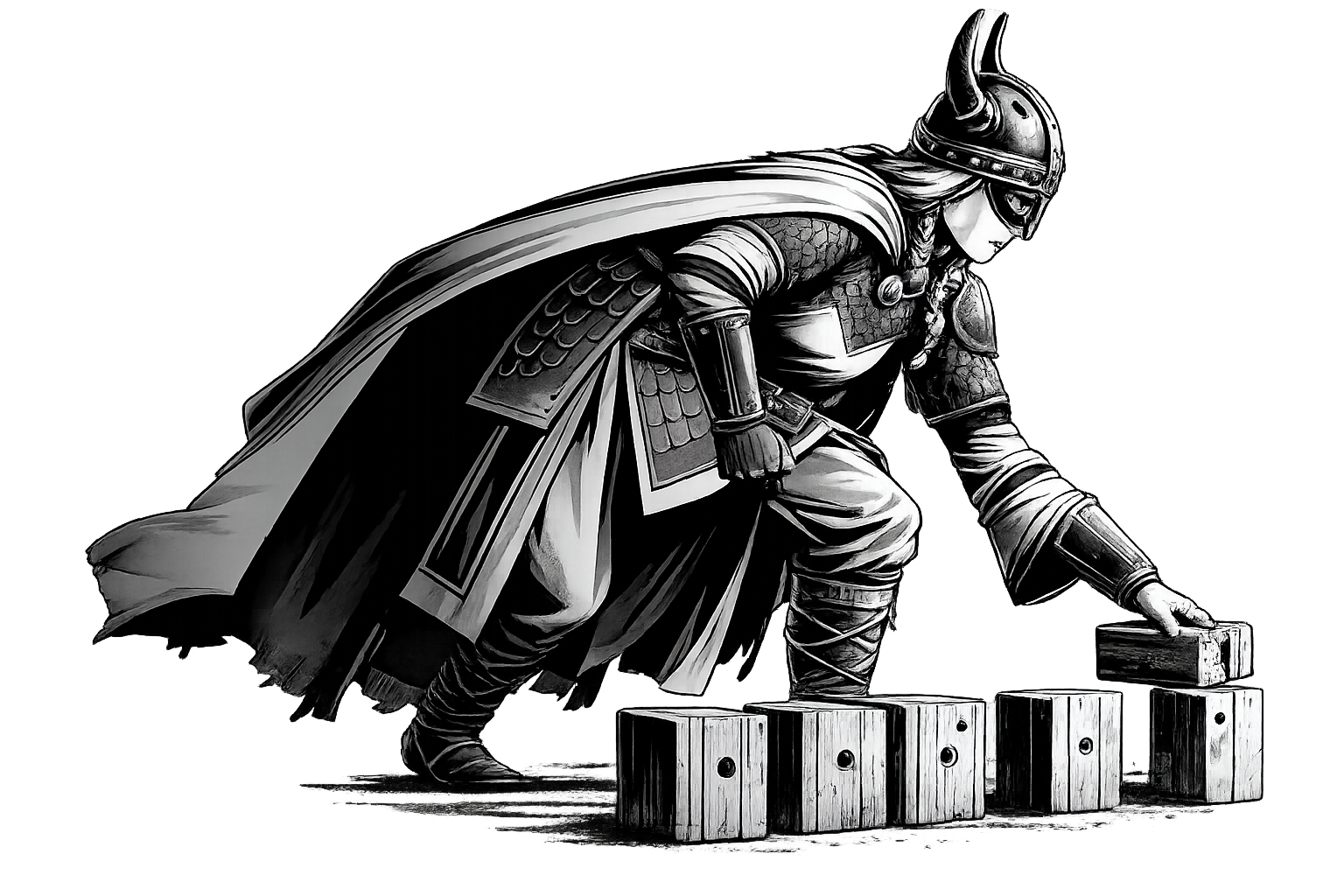
How do we set up the fields
- ºThe field is 26′ long × 16′ wide
- ºOn each short side (16′) we set up 5 Kubbs
- ºIn the middle of the field there's a piece called the King
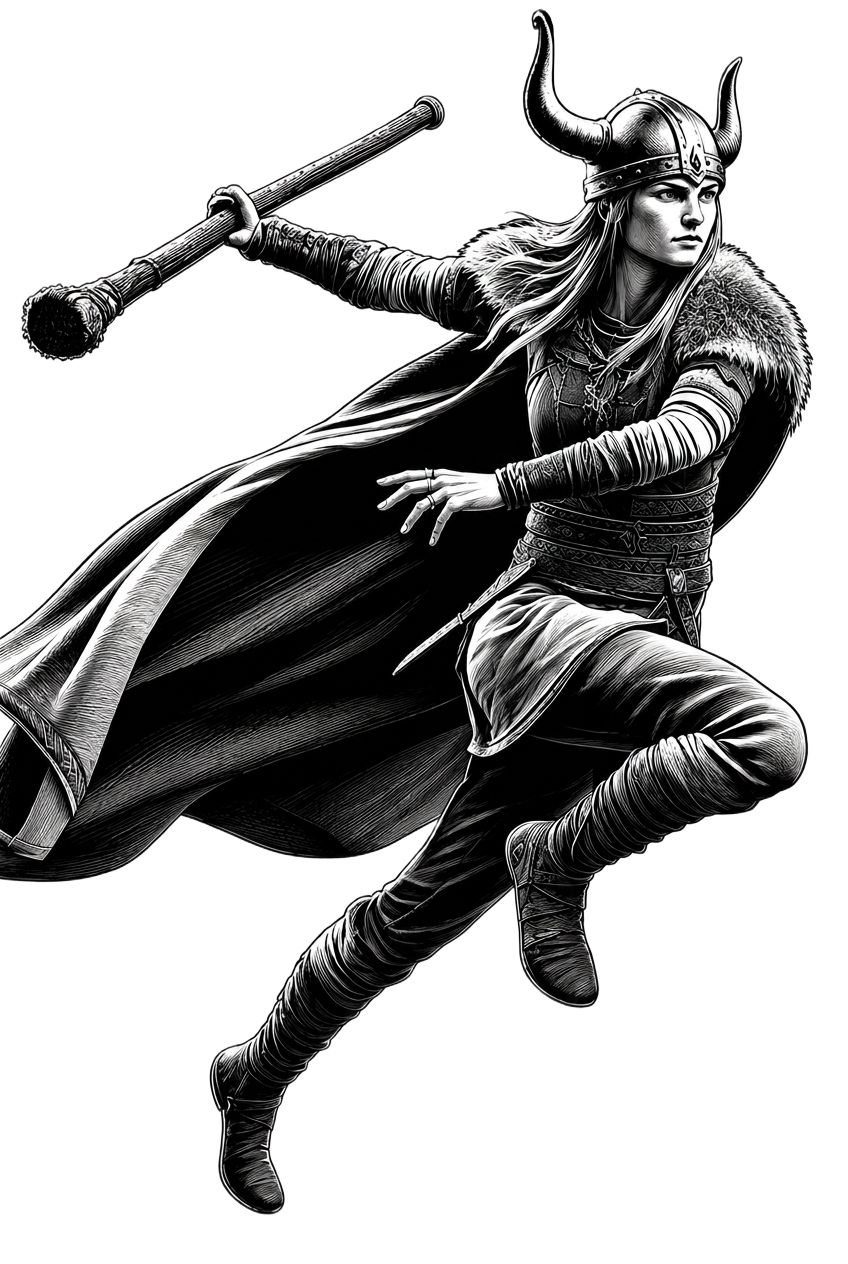
How to throw the baton
- ºIn each round, two players per team will throw 2 batons, and the other two will throw 1 baton
- ºEach team decides who throws 1 or 2 batons each round
- ºPlayers must alternate between throwing 1 and 2 batons from round to round
- ºNo player is allowed to throw more than 2 batons in a single round
- ºAll players must stand behind their team's baseline kubbs when throwing
- ºAll baton throws must be made underhand
- ºBatons are allowed to rotate vertically (end-over-end)
- ºBatons are not allowed to rotate horizontally (sideways or helicopter-style)

Which team starts the game
- ºEach team selects one player to represent them and picks one Baton
- ºThe two representatives stand behind opposite baselines, facing each other
- ºBoth players count aloud together: "1, 2, 3," then simultaneously throw their Baton according to standard throwing rules
- ºOnce both Batons come to rest, the Baton closest to the King (without knocking it over) determines the winner
- ºThe winning team chooses either: Throwing order (go first or second) or Which baseline to defend
- ºThe losing team then chooses the remaining option
- ºAll games begin with a "2, 4, 6" opening sequence:
- ºThe starting team throws 2 Batons
- ºThe second team throws 4 Batons
- ºThe starting team then throws 6 Batons
- ºAfter this, both teams continue with 6 Batons per round
How to play Kubb?
Let's take a closer look at how the actual game works
Team 1
- ºThe attacking team throws 6 batons from behind their baseline, aiming to knock down the defending team's base Kubbs (the Kubbs standing on the opponent's baseline)
- ºNo player may throw more than 2 batons in a single round
- ºBatons must be thrown one at a time—no simultaneous throws
- ºThe King may be touched by a baton but cannot be knocked over until all other Kubbs (both field and base) have been knocked down
- ºIf a team knocks over the King before clearing all Kubbs, that team loses the round immediately
- ºA Kubb is considered knocked down only if it falls over
- ºIf a baton touches a Kubb but it remains standing, it does not count
- ºIt is allowed to knock down multiple base Kubbs with a single baton throw
- ºIf a Kubb is hit and pushed out of bounds (outside the baseline) without falling over, it must be returned to its previous position on the baseline
- ºIf a Kubb is wobbling or in question after being hit, allow a reasonable amount of time to see if it falls naturally
- ºIf a Kubb falls on its own (not due to a baton throw), it must be reset in its original position
- ºOnce all 6 batons have been thrown, the attacking team's turn is complete
Throwing field Kubbs – Team 2
- ºAfter the attacking team (Team 1) has thrown all 6 batons, the defending team (Team 2) becomes the new attacking team
- ºIf Team 1 knocked down any base Kubbs, Team 2 must first toss those Kubbs back onto Team 1's side of the field
- ºThese tossed Kubbs are now called field Kubbs
- ºIf a field Kubb lands out of bounds, the team has up to 3 attempts to re-throw it and land it in bounds
- ºIf the Kubb is still out of bounds after 3 throws, the opposing team may place that Kubb anywhere in bounds on their half of the field (at least 1 foot away from the king)
- ºOnce all field Kubbs have come to rest in bounds, they are stood upright (raised) exactly where they landed
- ºThe raised field Kubbs can be oriented in any direction, as long as two corners of the Kubb remain in contact with the ground
- ºWhile throwing, if a field Kubb lands on another field Kubb without first hitting the ground, the field Kubbs may be stacked upon one another
First round – Team 2
- ºIf Team 1 knocked down any Kubbs in the previous round, then Team 2 must toss those Kubbs back onto Team 1's side of the field and raise them as field Kubbs, as previously explained
- ºTeam 2 must then knock down all field Kubbs before they are allowed to aim at Team 1's base Kubbs
- ºPlayers are allowed to knock down multiple field Kubbs with 1 throw
- ºOnce a field Kubb is knocked down, it is removed from play for the rest of the game
- ºOnly after all field Kubbs have been knocked down may the team begin targeting the opponent's base Kubbs
- ºAfter this, play continues following the same steps outlined under the "First Round – Team 1" section
How to win the game?
- ºOnce a team knocks down all their field Kubbs and opponent's base Kubbs, they aim for the King
- ºThe first team to knock down the King (after knocking down all their other Kubbs) wins the game
- ºIf a team knocks over the King before clearing all Kubbs, that team loses the game immediately
- ºOnce a team has won 2 games they win the battle (each battle is best out of 3 games)
And remember, the winner of the entire tournament gets a traveling trophy that they keep for the whole year. Each person on the winning team will take turns with the trophy and must take fun pictures with the trophy.